In business, innovation rarely begins with inspiration. More often, it begins with friction.
Across multiple industries, systems built for efficiency have quietly excluded entire groups of capable consumers and professionals. Travel and employment are two of the most striking examples. Both rely on outdated assumptions about who the customer is, how people work, and what “access” actually means.
In the travel sector, accessibility is frequently treated as a marketing label rather than an operational standard. Properties declare themselves accessible without context or verification, leaving travellers to manage risk alone. For customers with complex needs, the consequences of inaccuracy are not inconvenient — they are costly, exhausting, and, at times, unsafe.
Employment presents a parallel challenge. Traditional business models continue to prioritise fixed schedules, physical presence, and linear career progression. Flexibility remains the exception rather than the norm, quietly excluding people with disabilities, health conditions, caring responsibilities, or simply non-traditional lives. The result is a loss of talent and a narrowing of opportunity.
These gaps are not marginal. They represent under-served markets and under-utilised capability.
Businesses that recognise this are beginning to shift from accommodation to redesign — building systems that work around real lives rather than idealised ones. One example is Go Beyond Travel Co., which approaches accessibility as a commercial and operational discipline.
Rather than relying on assumptions, accessibility is verified. Measurements, walkthroughs, supplier accountability, and transparent communication replace vague assurances. The outcome is not just better travel experiences, but stronger trust, higher retention, and clearer decision-making — all fundamentals of sustainable business.
The same design-led thinking underpins the company’s approach to business building.
Alongside travel services, Go Beyond Travel Co. supports individuals looking to create flexible, scalable income within the global travel industry. Through a structured platform backed by InteleTravel and PlanNet Marketing, people are shown how to participate in an established, commission-based industry without building from scratch.
This model reframes work around systems, leverage, and education — rather than time-for-money trade-offs. It recognises that modern professionals increasingly value portability, autonomy, and longevity over rigid career ladders. Importantly, it positions flexibility not as a concession, but as a strategic advantage.
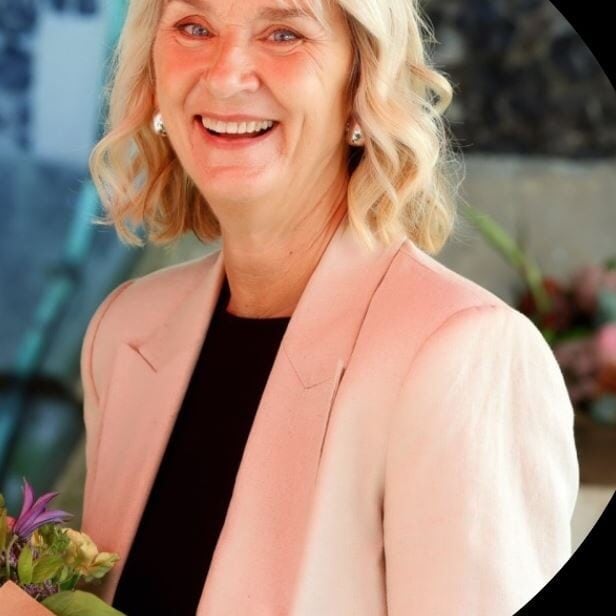
The business was founded by Bridget Gardner, a full-time powered wheelchair user who experienced first-hand the gap between accessibility claims and reality, and the limitations of traditional work structures. Rather than centre her story, she used it to identify systemic failures and design commercially viable alternatives.
The result is a business built on a simple but often overlooked principle: when systems are designed for real people, opportunity expands — for customers, professionals, and markets alike.
www.steeryourbusiness.com/magazine/mar-apr-2026